
Modern Cow Cubicle Shed Design Guide: Layouts & Mattress Selection
In modern industrial dairy farming, maximizing herd productivity relies heavily on understanding livestock ergonomics. Implementing a scientifically backed cow cubicle shed design is the single most effective way to ensure high herd longevity, low somatic cell counts (SCC), and optimized milk yields. Since a dairy cow requires 12 to 14 hours of resting time daily to maximize blood flow to the udder, the layout configuration and sub-floor surfacing of the free stalls dictate the entire farm's economic efficiency.
1. Geometric Parameters for Cow Cubicle Shed Design
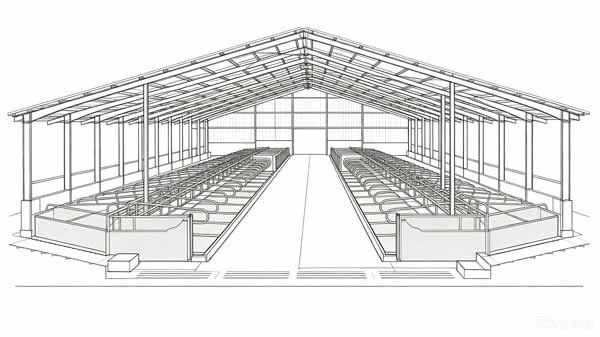
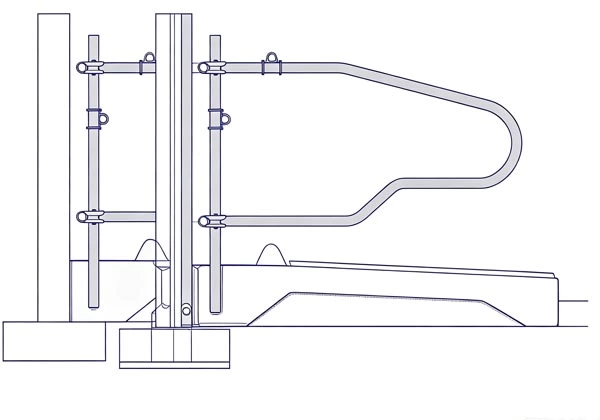
An optimized cow cubicle shed design must adapt seamlessly to the natural kinesiology of the cattle. When transitioning modern herds from standing to lying positions, cows require sufficient forward momentum room, commonly referred to as "lunge space." If the stall dividers are cramped, cows will stand idle in the muck alleys, directly causing hoof chipping, digital dermatitis, and lameness. B2B agricultural project contractors must utilize precise engineering blueprints to avoid these pitfalls.
| Stall Layout Dimension | Standard Industrial Specification (Mature Holstein Herds) |
|---|---|
| Total Length (Single Wall Facing) | 2.60m to 2.75m (Essential for unobstructed head lunging space) |
| Total Length (Head-to-Head Double Row) | 2.40m to 2.50m per individual side (Shared center lunge zone) |
| Clear Stall Width (Center-to-Center) | 1.15m to 1.25m (Standardized center dimension at 1.22 meters) |
| Brisket Board Distance Profile | 1.68m to 1.75m measured horizontally from the inside rear curb edge |
| Rear Curb Height Elevation | 20 cm to 22 cm above the mechanical automatic alley scraping plane |
2. Material Selection: High-Performance Rubber Cow Cubicle Mattresses
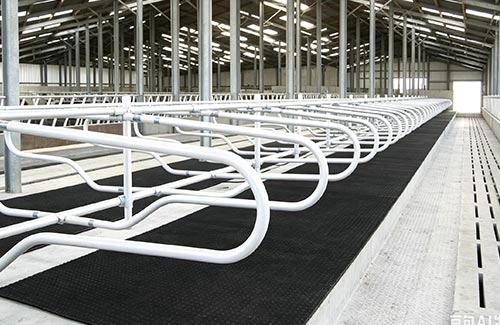
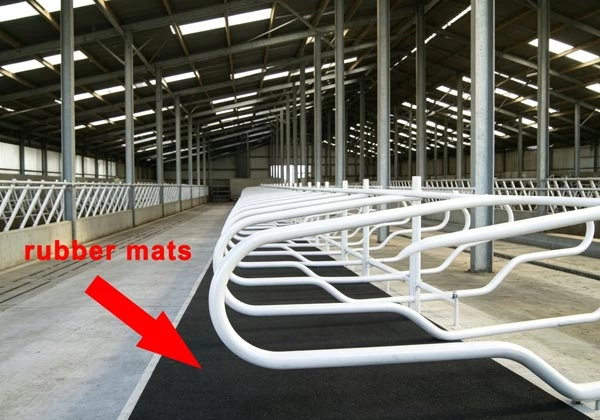
While accurate structural steel mapping sets the foundation, the contact surface layer dictates whether the cattle actually utilize the stalls. Modern commercial agricultural groups are heavily replacing high-maintenance loose sand or bare concrete bedding with continuous vulcanized cow cubicle mattresses. These engineered rubber mattress rolls provide optimal thermal insulation and cushion the cow's heavy joint impacts during daily lying cycles.
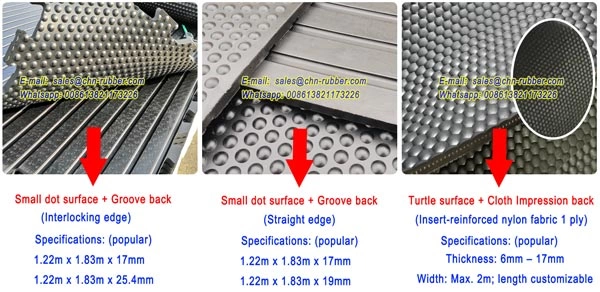
Our product range extends beyond those mentioned above; we also offer cow cubicle mattresses in various other specifications and anti-slip patterns. Interested in learning more? Please request our catalog →
When evaluating premium rubber matting rolls for large livestock commissions, procurement managers must evaluate several structural variables:
- Seamless Roll Formats: Utilizing interlocking or individual mats often creates open seams where organic waste gathers. Opting for continuous rubber mattress rolls with up to a 2-meter MAX width ensures long, uninterrupted bays that completely isolate the underlying concrete from fluid seepage.
- Anti-Slip Turtle Topography: The top layer must be designed with an ergonomic turtle surface pattern. This custom texture yields multidirectional mechanical grip when cows push up with their hind legs, drastically dropping slip trauma while allowing quick manual sweeping and maintenance.
- Cloth Impression Backing: The underside features a high-friction cloth impression texture. This rough texture prevents the matting from shifting or bubbling out of position under intense vertical livestock loads.
- Nylon Mesh Reinforcement Matrix: Heavy cattle cause rubber to stretch over time. Integrating an internal 1-ply nylon fabric reinforcement prevents permanent thermal elongation and elongation tearing, ensuring a uniform thickness profile across years of high-capacity wear.
3. Slope Configuration and Waste Drainage Integration
Moisture management is a critical factor in mitigating environmental mastitis and maintaining pristine animal hygiene. The concrete bedding base of the cow cubicle shed design must incorporate a calculated 2% to 3% downward slope falling away toward the rear cleaning alleyways. This gravity incline works symmetrically with the micro-grooves or cloth texture on the mattress backing, ensuring any moisture channels directly off the stall platform.
Concurrently, building eave elevations should ideally be specified above 4.0 meters in standard temperate zones to maximize ambient natural cross-ventilation. Constant volumetric air displacement helps keep humidity low and controls indoor ammonia levels, establishing an optimal habitat that promotes milk synthesis.
Industrial Wholesale and B2B Sourcing Support
As a dedicated high-capacity agricultural rubber manufacturing factory, we specialize in supplying global distributors, engineering contractors, and agricultural procurement teams. We deliver tailored product specifications, offering custom length adjustments to fit massive livestock configurations seamlessly. Available in robust industrial black, safety red, or rich blue rubber compounds, our products come with heavy export wood palletization to guarantee damage-free transit and quick on-site deployment.